The Role of Virtual Data Rooms (VDRs) in Insolvency and CIRP Processes in India
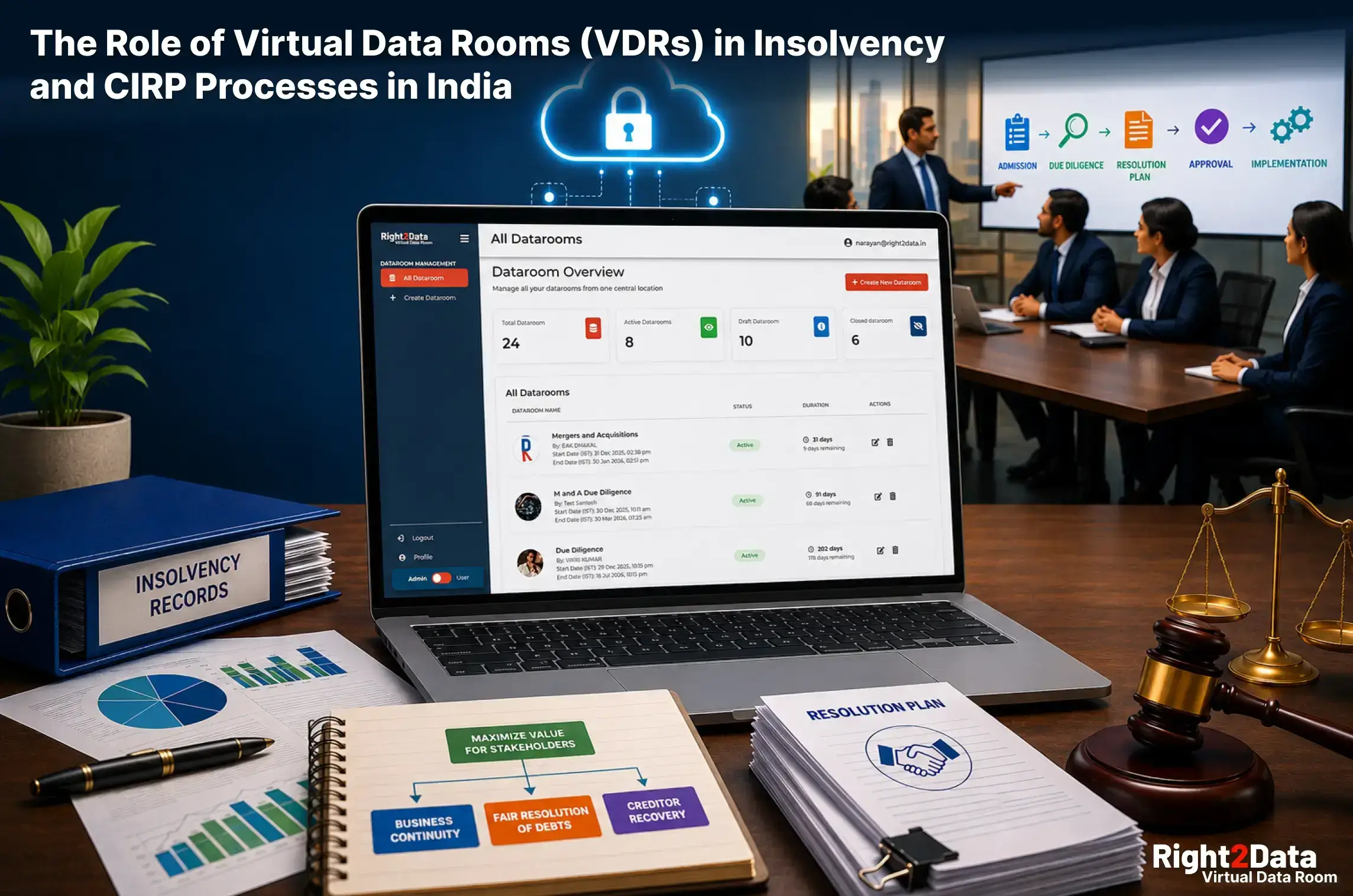
India’s insolvency ecosystem has undergone a significant transformation since the introduction of the Insolvency and Bankruptcy Code (IBC), 2016. The framework has improved creditor recovery mechanisms, streamlined resolution processes and created a structured approach to corporate insolvency. However, the success of any Corporate Insolvency Resolution Process (CIRP) depends heavily on transparency, information accessibility, compliance and efficient stakeholder coordination.
The IBC and IBBI Regulations require Resolution Professionals (RPs) to share the Information Memorandum (IM) and relevant details with Prospective Resolution Applicants (PRAs) who sign a confidentiality undertaking. The regulations clearly dictate what must be shared and to whom. The scale of data involved in a corporate insolvency process makes a VDR practically essential. RPs must maintain strict compliance with data privacy frameworks. VDRs allow RPs to control access, track document usage, prevent unauthorized downloads, and also manage digital voting for the Committee of Creditors (CoC) which is separately available on our sister concern Right2Vote
As insolvency proceedings become increasingly digital and time-sensitive, Insolvency Professionals (IPs), Resolution Professionals (RPs), lenders, Committee of Creditors (CoC) members, prospective resolution applicants and legal advisors require a trusted, cost effective VDR solution like Right2Data the best VDR for CIRP in India.
What Is CIRP Under the Insolvency and Bankruptcy Code (IBC)?
The Corporate Insolvency Resolution Process (CIRP) is a legal mechanism under the Insolvency and Bankruptcy Code, 2016, designed to resolve insolvency of corporate entities within prescribed timelines.
The objective of CIRP is to:
- Maximize value for stakeholders
- Facilitate business continuity
- Enable fair resolution of debts
- Improve creditor recovery
- Attract potential resolution applicants
- Promote transparent decision-making
The process involves multiple stakeholders reviewing sensitive information related to the Corporate Debtor.
Key Stakeholders in a CIRP Process
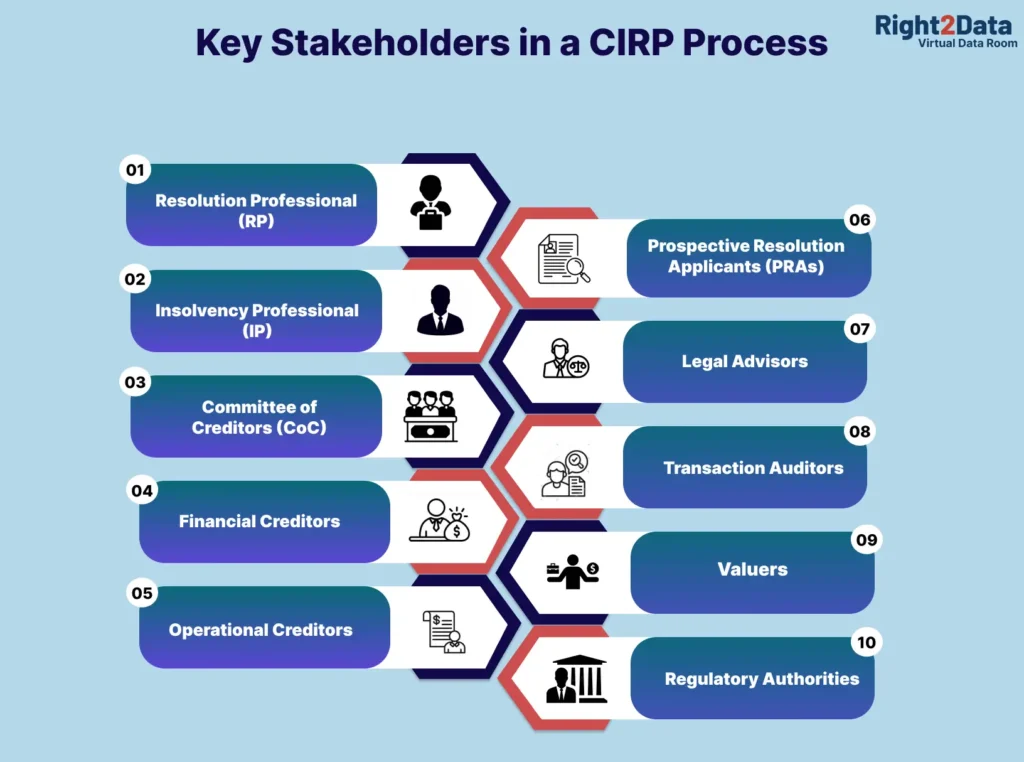
Each stakeholder requires access to specific information while maintaining strict confidentiality and compliance with applicable regulations.
Managing these information flows manually can become extremely challenging.
Why Information Management Is Critical During CIRP
One of the most important responsibilities of a Resolution Professional is maintaining transparency while safeguarding confidential business information.
During CIRP, thousands of documents may need to be reviewed, including:
- Financial Statements
- Bank Records
- Asset Registers
- Legal Proceedings
- Litigation Documents
- Employee Information
- Contracts and Agreements
- Tax Records
- Regulatory Filings
- Operational Reports
- Intellectual Property Documents
- Vendor Agreements
Without a structured system, document management becomes inefficient and prone to risks.
Challenges of Traditional Document Sharing in Insolvency Cases
Historically, insolvency professionals relied on:
- Physical data rooms
- Email communication
- Shared folders
- Generic cloud storage platforms
- Manual document requests
These methods create significant challenges.
Common Issues Include
Security Risks
Sensitive financial and operational information can be exposed through unauthorized sharing of documents or by simply forwarding a link.
Lack of Auditability
It becomes difficult to track:
- Who accessed documents
- Which files were viewed
- Download activity
- User engagement
Version Control Problems: Multiple versions of the same document often create confusion among bidders and advisors.
Administrative Burden: Managing access requests manually consumes substantial time and resources.
Compliance Challenges: Maintaining a clear record of information sharing becomes difficult during regulatory reviews or legal proceedings.
What Is a Virtual Data Room (VDR)?
A Virtual Data Room (VDR) is a secure cloud-based platform specifically designed for managing and sharing confidential documents during high-value transactions and regulated processes. Unlike standard file-sharing platforms, a Professional VDR Provides:

These capabilities make VDRs particularly valuable during insolvency and CIRP proceedings.
How VDRs Support Insolvency and CIRP Processes
Centralized Repository for Corporate Debtor Information
A VDR serves as a single source of truth where all relevant CIRP documents can be securely stored and organized.
This allows stakeholders to access information efficiently without relying on scattered communication channels.
Benefits include:
- Structured document management
- Faster information retrieval
- Reduced duplication
- Improved process transparency
Secure Access for Prospective Resolution Applicants
Resolution Applicants require extensive access to business information before submitting resolution plans.
A VDR enables:
- Controlled access permissions
- Secure document review
- Restricted downloads
- Confidential information protection
This creates confidence among bidders while protecting the interests of the Corporate Debtor.
Enhanced Transparency for Committee of Creditors (CoC)
The Committee of Creditors plays a critical role in evaluating resolution plans and monitoring the CIRP process.
Using a VDR allows CoC members to:
- Access updated information
- Review transaction documents
- Monitor key developments
- Maintain transparency across stakeholders
This improves decision-making and reduces information asymmetry.
Detailed Audit Trails and Compliance
Transparency and accountability are fundamental requirements in insolvency proceedings.
A professional VDR records:
- User login history
- Document access logs
- Viewing activity
- Download activity
- Permission changes
- Administrative actions
These audit trails create a defensible record of all information-sharing activities.
Dynamic Watermarking for Information Security
Confidentiality is essential during CIRP.
Right2Data VDR applies dynamic watermarks containing:
- User Name
- Email Address
- IP Address
- Timestamp
To download documents.
This significantly reduces the risk of unauthorized sharing and information leakage.
Efficient Due Diligence for Resolution Applicants
Prospective buyers and investors often conduct extensive due diligence before submitting resolution plans.
A VDR enables secure access to:
- Financial data
- Legal records
- Operational information
- Compliance documents
This accelerates diligence timelines and improves bidder participation.
Role of VDRs During Different Stages of CIRP
Admission and Initial Assessment
During the early stages of CIRP, the Resolution Professional gathers and organizes information from multiple sources.
A VDR helps:
- Consolidate documents
- Create structured repositories
- Prepare information for stakeholders
Preparation of Information Memorandum
The Information Memorandum (IM) forms the foundation of the resolution process.
A VDR supports:
- Secure IM sharing
- Controlled bidder access
- Efficient document updates
- Version management
Bidder Due Diligence
Resolution Applicants require access to:
- Financial records
- Operational reports
- Asset information
- Legal documentation
A VDR simplifies secure bidder access while maintaining confidentiality.
Resolution Plan Evaluation
Committee of Creditors members can review:
- Resolution plans
- Supporting documents
- Financial models
- Comparative analyses
through a centralized platform.
Post-Approval Documentation
Even after approval of a resolution plan, a VDR remains useful for:
- Record retention
- Compliance documentation
- Regulatory audits
- Transaction closure activities
Disputes
The primary scenarios where these audit logs must be produced include:
-
Disputes Over Information Asymmetry or Discriminatory Access
If a Prospective Resolution Applicant (PRA) files an Interlocutory Application (IA) with the NCLT claiming that the Resolution Professional (RP) favored a specific bidder by giving them more information or longer access, the RP must defend themselves.
- The Log Requirement: The RP submits the VDR audit log to the NCLT to prove equal opportunity.
- What it proves: The exact timestamp when data folders were opened for all parties, proving no single bidder received a head start or exclusive files.
-
Allegations of Data Leaks and Confidentiality Breaches
Section 29(2) of the IBC mandates that the RP must maintain strict confidentiality of all data shared during the Corporate Insolvency Resolution Process (CIRP). If proprietary data leaks to the market or a competitor:
- The Log Requirement: The RP or an aggrieved party can bring the VDR access logs to the NCLT or regulatory authorities.
Why Insolvency Professionals Prefer Right2Data VDR
Right2Data VDR has emerged as a preferred Virtual Data Room provider for insolvency and CIRP proceedings in India because it combines security, compliance and affordability. Right2Data VDR for CIRP
Key Features Include

Regulatory Expectations and Information Security
With increasing focus on data governance and digital compliance, insolvency professionals must ensure that sensitive information is handled responsibly.
A professional VDR helps organizations align with:
- Insolvency and Bankruptcy Board of India (IBBI) expectations
- Information-sharing requirements under IBC
- Data security best practices
- Confidentiality obligations
- Audit and compliance requirements
Benefits of Using a VDR in CIRP Processes
Organizations using a Virtual Data Room during insolvency proceedings benefit from:
- Faster stakeholder collaboration
- Improved transparency
- Enhanced bidder participation
- Better information governance
- Reduced administrative workload
- Stronger data security
- Comprehensive auditability
- Streamlined due diligence
- Improved compliance readiness
- More efficient resolution processes
The Future of Insolvency Resolution Is Digital
As India’s insolvency ecosystem matures, digital infrastructure is becoming a critical component of successful resolution processes. Resolution Professionals are increasingly expected to manage larger volumes of information while maintaining transparency, confidentiality and compliance.
Virtual Data Rooms provide the secure digital infrastructure needed to meet these expectations.
For modern insolvency proceedings, a VDR is no longer an optional convenience, it is becoming an operational necessity.
Why Right2Data VDR Is the Preferred Choice for CIRP
Right2Data VDR is designed specifically for Indian transaction environments, including insolvency proceedings, due diligence exercises, M&A transactions and regulatory reviews.
By combining:
- Enterprise-grade security
- Dynamic watermarking
- Detailed audit trails
- India-hosted infrastructure
- Affordable pricing
- Transaction-focused workflows
Right2Data VDR enables Insolvency Professionals to conduct CIRP processes securely, transparently and efficiently.
Frequently Asked Questions (FAQs)
1. What is a VDR in insolvency proceedings?
A Virtual Data Room is a secure platform used to store, organize and share confidential documents during insolvency and CIRP processes.
2. Why is a VDR important in CIRP?
A VDR improves transparency, security, stakeholder collaboration and auditability throughout the insolvency resolution process.
3. Who uses a VDR during CIRP?
Resolution Professionals, Committee of Creditors members, lenders, legal advisors, valuers and prospective resolution applicants commonly use VDRs.
4. How does a VDR help Resolution Applicants?
It provides secure access to financial, legal and operational information required for due diligence and resolution plan preparation.
5. Does Right2Data VDR support CIRP requirements?
Yes. Right2Data VDR provides audit trails, dynamic watermarking, granular permissions and secure document sharing specifically suited for insolvency proceedings.
6. Is a VDR useful after CIRP completion?
Yes. VDRs help retain records, support regulatory audits and maintain compliance documentation after resolution plan approval.
Choose Right2Data VDR for speed, security and success in 2026. India’s Most Affordable Virtual Data Room for Mergers, Acquisitions, Due Diligence, IPOs and Beyond.
Table of Contents :
Important links :
Recent Blogs :
-
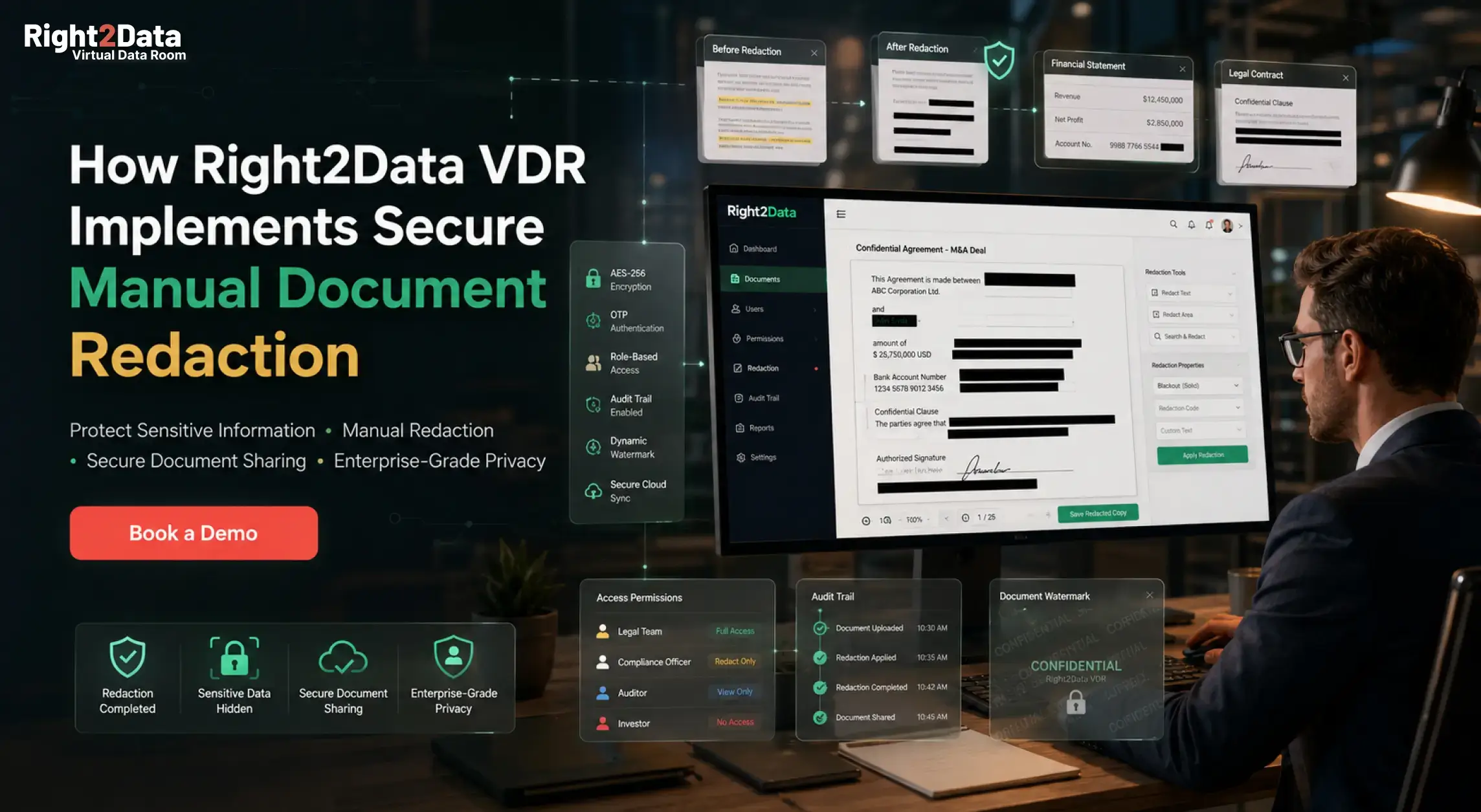 How Right2Data VDR Implements Secure Manual Document Redaction
-
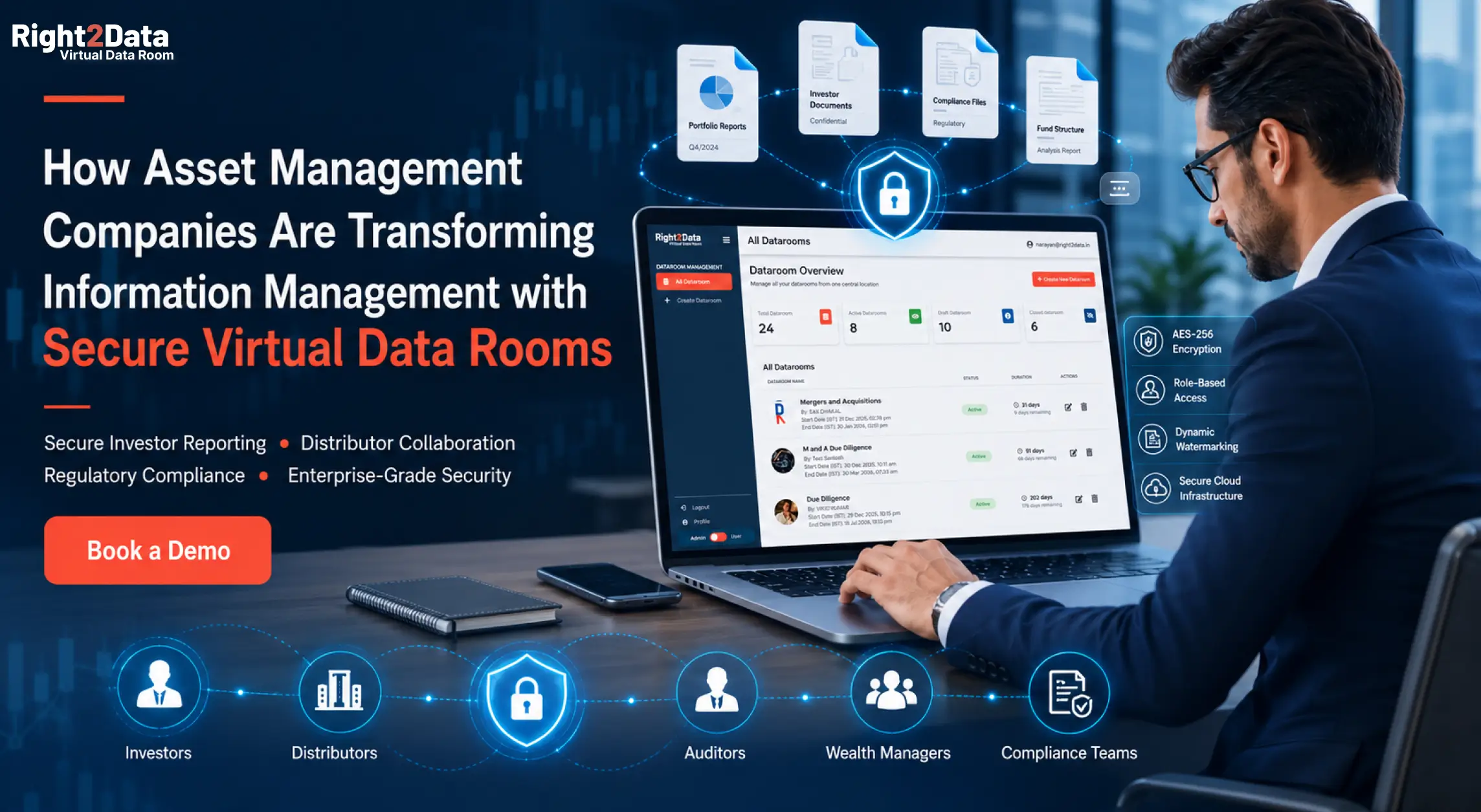 How Modern Asset Management Companies Are Transforming Information Management with Secure Virtual Data Rooms
-
 Startup Fundraising in 2026: Why Virtual Data Rooms (VDRs) Are Essential for Venture Capital Due Diligence
-
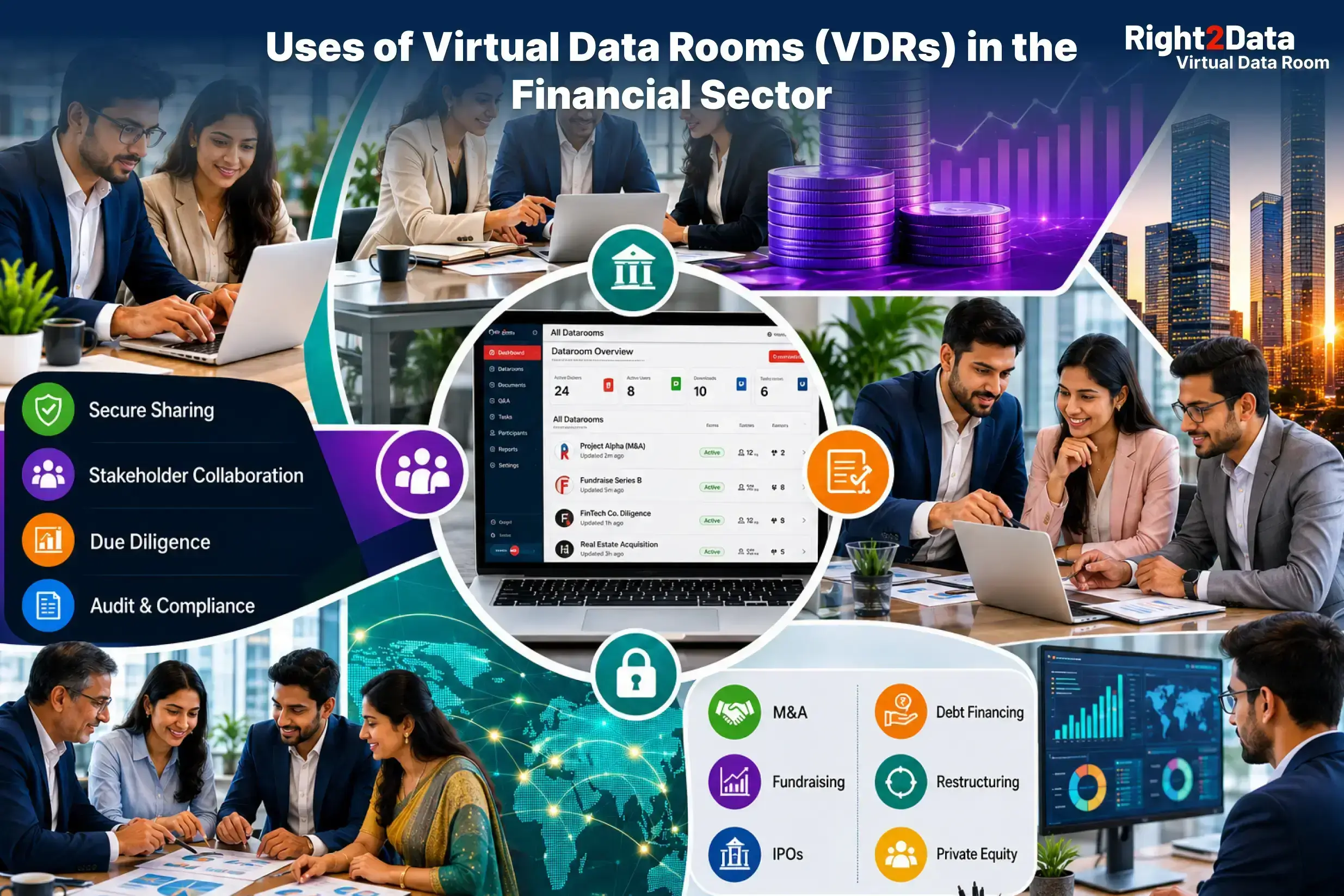 Uses of Virtual Data Rooms (VDRs) in the Financial Sector: What Financial Advisors Cannot Afford to Miss in a Modern Data Room