Uses of Virtual Data Rooms (VDRs) in the Financial Sector: What Financial Advisors Cannot Afford to Miss in a Modern Data Room
The financial services industry has always been driven by information. Whether advising on a merger, managing a fundraising round, preparing a company for an IPO, conducting due diligence, or restructuring distressed assets, financial advisors operate in an environment where the quality, security and accessibility of information can directly influence transaction outcomes.
In today’s global financial markets, transactions are larger, faster and more complex than ever before. Deals frequently involve multiple stakeholders across different jurisdictions, strict regulatory oversight, heightened cybersecurity risks, and enormous volumes of confidential documents. As a result, traditional methods of document sharing, emails, shared drives and generic cloud storage platforms are no longer sufficient.
This is why Virtual Data Rooms (VDRs) have become a standard tool across investment banking, private equity, venture capital, asset management, corporate finance and advisory firms worldwide.
Modern VDRs do far more than store documents. They provide a secure, auditable and collaborative environment that helps financial advisors manage transactions efficiently while maintaining confidentiality and compliance.
For advisors involved in mergers and acquisitions, fundraising, debt financing, IPOs, or strategic transactions, understanding how to leverage a VDR and which features are essential can make a significant difference in transaction execution.
Why Financial Institutions Rely on Virtual Data Rooms
Every financial transaction begins with information and ends with confidence.
Before investors commit capital, lenders approve financing, or buyers sign acquisition agreements, they need access to accurate and reliable information.
A typical financial transaction may involve:
- Financial statements
- Audit reports
- Tax records
- Corporate governance documents
- Shareholding structures
- Commercial contracts
- Regulatory filings
- Intellectual property records
- Litigation history
- Customer and supplier agreements
- Management presentations
- ESG disclosures
Managing these documents manually becomes increasingly difficult as transaction complexity grows.
A Virtual Data Room solves this challenge by creating a secure digital environment where information can be organised, shared and monitored throughout the transaction lifecycle.
What Is a Virtual Data Room (VDR)?
A Virtual Data Room is a secure cloud-based platform designed specifically for managing and sharing confidential business information during high-value transactions.
Unlike standard cloud storage services, a VDR offers advanced security features and transaction management capabilities such as:
- Granular user permissions
- Dynamic watermarking
- Secure document viewing
- Audit trails
- Activity monitoring
- Time-based access controls
- Secure Q&A workflows
- Multiple administrator controls
- Document indexing and search capabilities
These features of Right2Data VDR make it particularly valuable for financial advisors handling sensitive information.
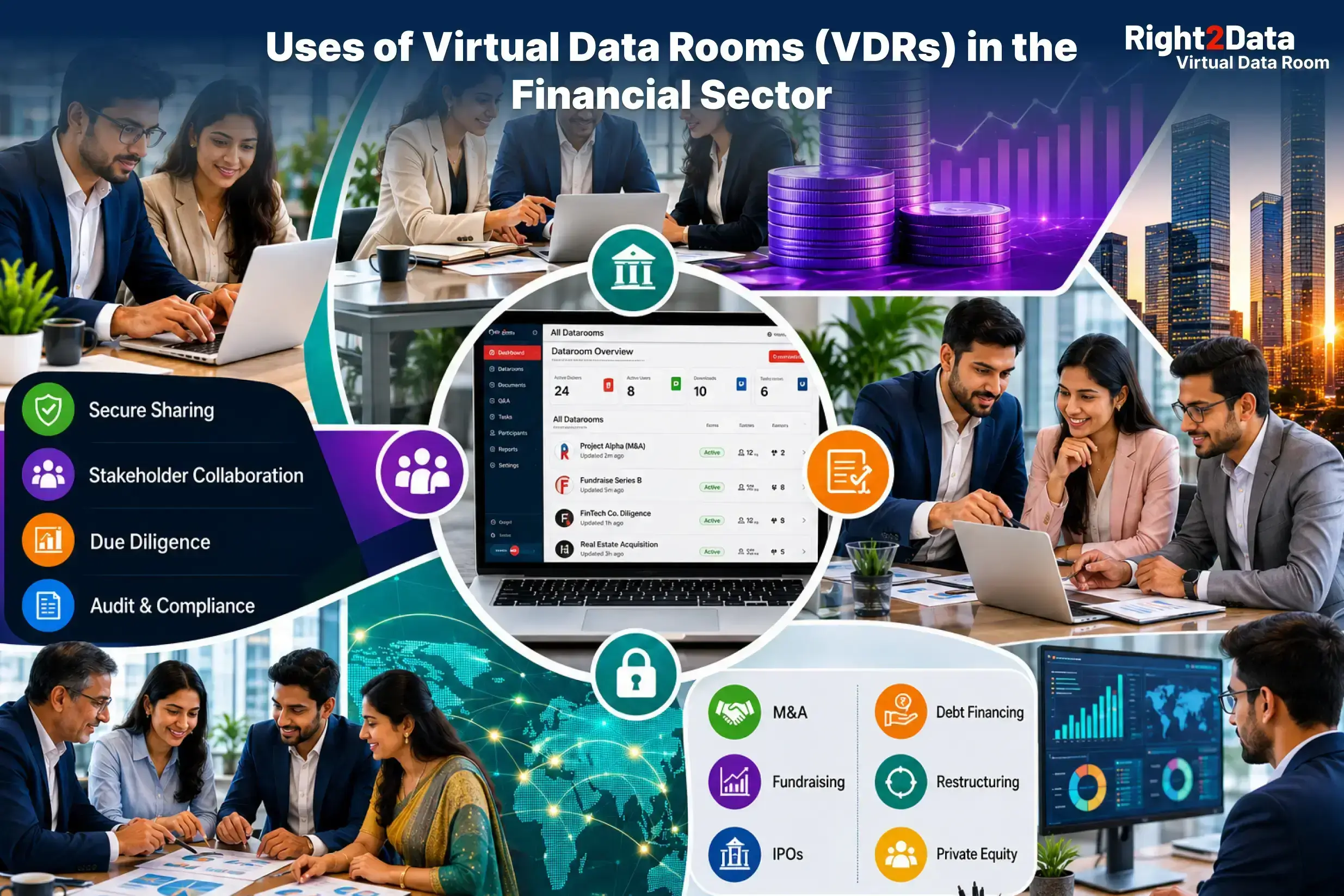
Key Uses of VDRs in the Financial Sector

Mergers and Acquisitions (M&A)
Mergers and acquisitions remain one of the largest use cases for Virtual Data Rooms.
During M&A transactions, buyers, sellers, legal advisors, auditors and investment bankers need access to large volumes of confidential information.
A VDR allows:
- Secure document sharing
- Faster due diligence
- Controlled stakeholder access
- Improved collaboration
- Reduced transaction delays
By centralising information in a structured environment, advisors can significantly improve transaction efficiency.
Private Equity and Venture Capital Transactions
Private equity and venture capital firms review substantial amounts of information before making investment decisions.
Investors typically evaluate:
- Historical financial performance
- Growth projections
- Customer concentration
- Operational metrics
- Intellectual property
- Regulatory risks
A Virtual Data Room enables secure and organised access to this information while maintaining confidentiality.
It also improves investor confidence by demonstrating operational maturity and governance discipline.
Fundraising and Capital Raising
Companies seeking funding often need to share sensitive information with multiple potential investors.
A VDR streamlines this process by providing:
- Secure investor access
- Controlled document visibility
- Activity tracking
- Auditability
- Efficient communication
Financial advisors can manage multiple investor groups simultaneously while maintaining complete control over information sharing.
Initial Public Offerings (IPOs)
Preparing for an IPO requires extensive documentation and stakeholder coordination.
Merchant bankers, auditors, legal advisors and regulators must review large volumes of information during the IPO process.
A VDR helps companies:
- Organize disclosures
- Manage due diligence
- Track document access
- Maintain version control
- Improve IPO readiness
As regulatory scrutiny increases globally, VDRs have become an essential component of IPO preparation.
Debt Financing and Lending Transactions
Banks and lenders require comprehensive access to borrower information before extending credit.
A Virtual Data Room facilitates secure sharing of:
- Financial statements
- Cash flow projections
- Asset information
- Compliance records
- Loan documentation
This accelerates credit assessments and improves transparency throughout the financing process.
Restructuring and Distressed Asset Transactions
In restructuring situations, stakeholders need rapid access to critical business information.
VDRs support:
- Insolvency proceedings
- Debt restructuring
- Asset sales
- Recovery transactions
- Creditor due diligence
By providing controlled access and detailed audit trails, VDRs improve transparency and stakeholder confidence. Best VDR for CIRP
Why Data Security Matters More Than Ever
Financial institutions are increasingly targeted by cybercriminals due to the value of the information they manage.
Confidential transaction documents often contain:
- Financial forecasts
- Strategic plans
- Acquisition terms
- Customer information
- Intellectual property
- Regulatory filings
A data breach during a transaction can have serious consequences,
including:
- Reputational damage
- Regulatory scrutiny
- Legal liability
- Transaction delays
- Loss of investor confidence
This makes security one of the most important considerations when selecting a Virtual Data Room.
What Financial Advisors Cannot Afford to Miss in a Modern Data Room?
Many organisations evaluate VDRs based solely on pricing or storage capacity. However, the most important features often relate to security, governance and transaction efficiency.
Here are the critical capabilities every financial advisor should look for.

1. Granular Permission Controls
Not all users should have access to all information.
A professional VDR should allow administrators to define permissions based on:
- User roles
- Groups
- Folders
- Individual documents
This ensures that sensitive information remains accessible only to authorised parties.
2. Dynamic Watermarking
Dynamic watermarking is one of the most effective ways to discourage unauthorised document sharing.
Modern VDRs automatically apply watermarks containing:
- User name
- Email address
- IP address
- Timestamp
This creates accountability and significantly reduces the risk of information leakage.
3. Comprehensive Audit Trails
Financial advisors require complete visibility into user activity.
A robust VDR should track:
- Login activity
- Document views
- Download history
- Time spent reviewing files
- Permission changes
These audit logs improve compliance and provide valuable transaction insights.
4. Secure Q&A Management
Transaction-related questions often involve multiple stakeholders.
A dedicated Q&A module allows:
- Structured communication
- Faster response management
- Reduced email dependency
- Better auditability
This feature is particularly valuable during competitive bidding processes.
5. Multiple Administrator Controls
Complex transactions often involve:
- Investment bankers
- Corporate management
- Legal advisors
- Finance teams
Multiple administrator capabilities improve collaboration while maintaining control over document management.
7. Bulk Uploads and Intelligent Document Organisation
Large transactions can involve thousands of documents.
A VDR should support:
- Bulk uploads
- Automated indexing
- Folder-level categorisation
- Advanced search functionality
These capabilities improve efficiency and reduce administrative effort.
8. Compliance and Regulatory Readiness
Financial institutions operate in highly regulated environments.
A modern VDR should support compliance requirements by offering:
- Secure data storage
- Auditability
- Access controls
- Data residency options
- Activity monitoring
These capabilities help organisations maintain regulatory readiness throughout the transaction lifecycle.
Emerging Trends Shaping Financial Data Rooms
The role of VDRs is evolving beyond document management.
Modern platforms increasingly incorporate:
- AI-Powered Search: Helping users quickly locate relevant information across large repositories.
- Automated Due Diligence Workflows: Reducing manual administrative effort and improving efficiency.
- Enhanced Cybersecurity Controls: Providing stronger protection against emerging threats.
- Real-Time Transaction Intelligence: Offering insights into investor and bidder behaviour.
- Cross-Border Collaboration Tools: Supporting global transactions with greater efficiency.
As transactions become more complex, these capabilities are becoming increasingly important.
How a Well-Managed VDR Improves Deal Outcomes
The quality of a data room often reflects the quality of transaction preparation.
Organisations with structured, well-organised VDRs typically benefit from:
- Faster due diligence
- Improved stakeholder confidence
- Better governance
- Reduced transaction risk
- More efficient collaboration
- Stronger compliance readiness
For financial advisors, this translates into smoother execution and a more professional transaction process.
Why Right2Data VDR Is Built for Financial Transactions
Right2Data VDR combines enterprise-grade security, advanced collaboration tools and transaction-focused workflows designed specifically for financial transactions.
Key capabilities include:
- Granular Permissions
- Dynamic Watermarking
- Multiple Admin Controls
- Secure Q&A Workflows
- Detailed Audit Logs
- Real-Time Activity Tracking
- OTP-Based Authentication
- Bulk Uploads and Indexing
- India-Hosted Infrastructure
- Affordable Enterprise Pricing
Whether supporting M&A transactions, private equity investments, fundraising, IPOs, debt financing or restructuring exercises, Right2Data VDR provides the secure digital infrastructure required by modern financial advisors.
Conclusion
Financial transactions are increasingly data-driven, regulated and time-sensitive. In this environment, a Virtual Data Room is no longer just a document repository. It is a strategic transaction management platform that improves security, transparency, efficiency and stakeholder confidence.
For financial advisors, selecting the right VDR and ensuring it includes critical features such as audit trails, dynamic watermarking, granular permissions and secure collaboration tools can significantly influence transaction success.
As global financial markets continue to evolve, organisations that invest in secure and efficient information management infrastructure will be better positioned to execute transactions confidently and competitively.
Frequently Asked Questions (FAQs)
1. Why are VDRs important in financial services?
VDRs provide secure document sharing, due diligence management, auditability and collaboration during financial transactions.
2. What are the most important VDR features for financial advisors?
Granular permissions, dynamic watermarking, audit trails, secure Q&A workflows and advanced analytics are among the most important features.
3. How do investment bankers use Virtual Data Rooms?
Investment bankers use VDRs for M&A transactions, fundraising, IPO preparation, due diligence and stakeholder collaboration.
4. Can VDRs improve transaction efficiency?
Yes. VDRs streamline document management, reduce administrative effort and accelerate due diligence processes.
5. Are VDRs useful for private equity firms?
Absolutely. Private equity firms use VDRs for investment evaluation, portfolio management and fundraising activities.
6. How do VDRs enhance security?
VDRs provide access controls, dynamic watermarking, audit trails, activity tracking and secure authentication to protect confidential information.
Choose Right2Data VDR for speed, security and success in 2026. India’s Most Affordable Virtual Data Room for Mergers, Acquisitions, Due Diligence, IPOs and Beyond.
Table of Contents :
Important links :
Recent Blogs :
-
 Document Redaction: Manual vs AI Redaction in Virtual Data Rooms | Right2Data VDR
-
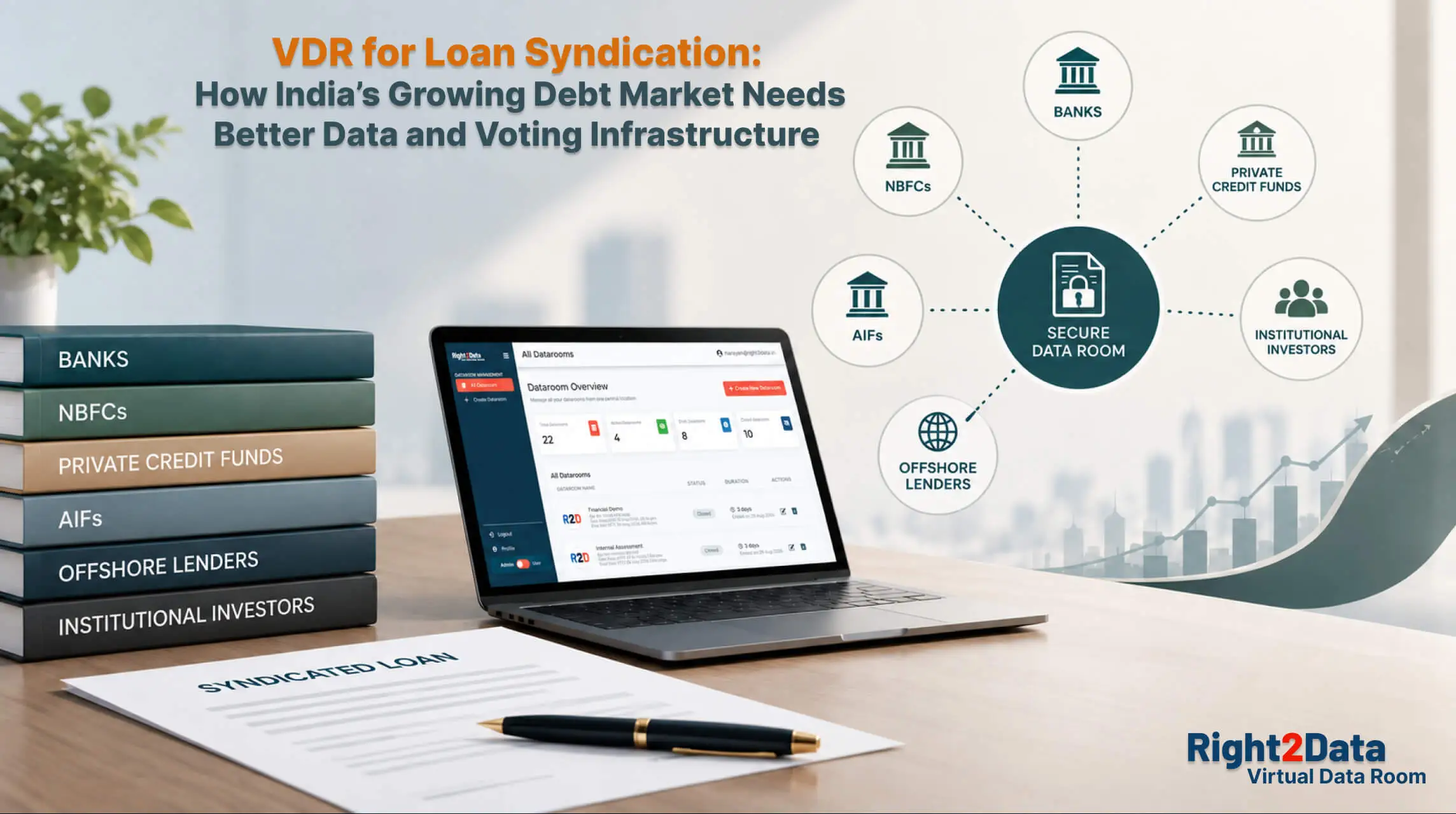 VDR for Loan Syndication: How India’s Growing Debt Market Needs Better Data and Voting Infrastructure
-
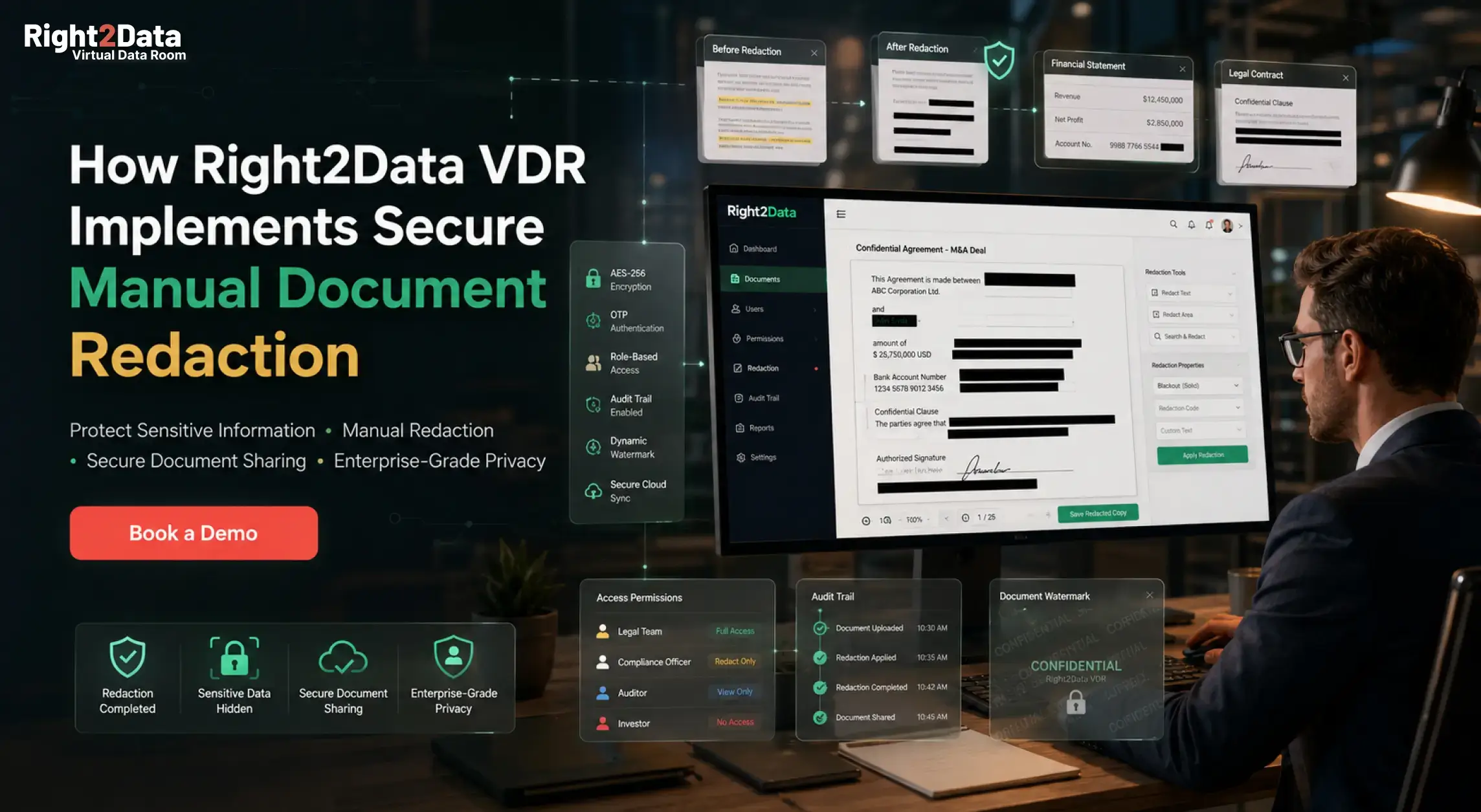 How Right2Data VDR Implements Secure Manual Document Redaction
-
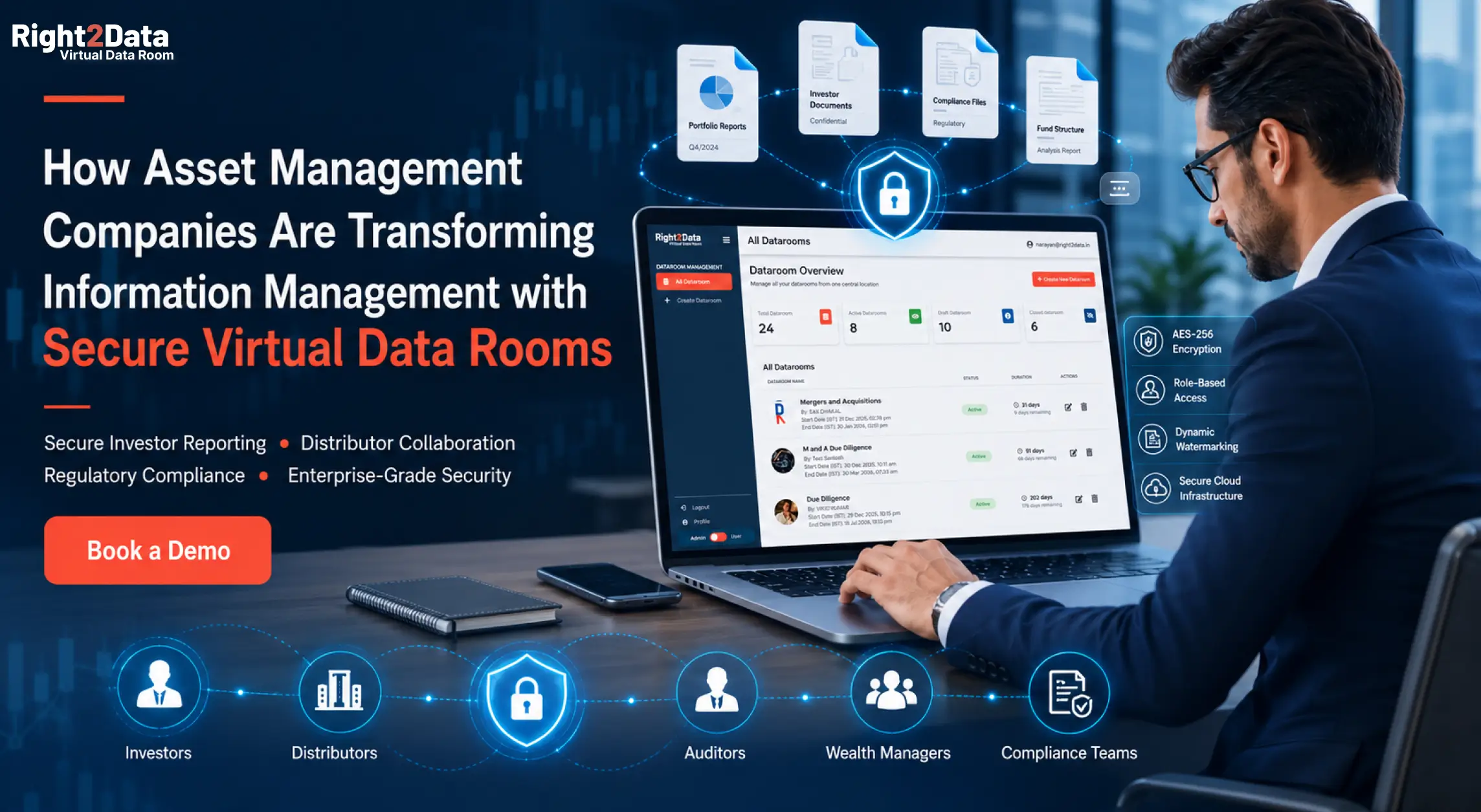 How Modern Asset Management Companies Are Transforming Information Management with Secure Virtual Data Rooms